
Africa is quietly creating one of the most important economic stories of our time. Women are beginning businesses at an unprecedented pace in cities, towns and rural locations throughout the globe. From small informal businesses to high-growth corporations, African women entrepreneurs are redefining livelihoods through employment and resilience throughout the continent.
This leadership does not represent a single trend. As it is a structural reality.
Multiple worldwide data sources agree that Africa has the largest number of female entrepreneurs in the world, with about one in every four African women involved in entrepreneurial activity. No other region comes close.
Despite this worldwide leadership, significant impediments remain. African women entrepreneurs are active, talented and ambitious. They frequently work in systems that limit their size, profits, and long-term security.
Understanding all sides of this reality becomes essential for Africa’s economic growth and Africa’s sustainable development.
So, let’s take a closer look at how African women are driving entrepreneurship, and what has to change to realize their full potential.
A Global First in Female Entrepreneurship
Data referenced by the World Bank, International Finance Corporation, and the World Economic Forum consistently show that Africa leads the world in female entrepreneurship.
Across sub-Saharan Africa, women account for nearly 58% of self-employed workers. In many countries, women are more likely than men to start a business, especially in early-stage entrepreneurship. This is not limited to one region. High participation appears in West Africa, East Africa, Southern Africa, and parts of North Africa, although the structure of businesses varies widely.
According to an analysis cited by Reuters and Devex, women entrepreneurs collectively contribute hundreds of billions of dollars to African economies each year. Estimates place the contribution at over 13% of Africa’s GDP, a figure that would rise sharply if women-led businesses had equal access to capital, markets, and skills.
This scale of participation means that female entrepreneurship is not a niche issue. It is a central pillar of Africa’s economic growth and job creation.
African Women Lead Informal Leadership With Formal Constraints
Despite high participation, most women entrepreneurs in Africa operate in the informal economy. Informality offers flexibility but limits growth. Informal businesses often lack legal recognition, access to credit, insurance, and formal supply chains.
Research highlighted shows that women-owned firms in Africa are smaller, employ fewer people, and generate lower profits than male-owned firms. On average, women entrepreneurs earn about 34 percent less profit than men.
This gap is not driven by effort or ambition. It reflects structural constraints.
Key factors include:
- Limited access to business financing and collateral
- Concentration in lower-margin sectors such as retail and services
- Unequal access to education and advanced skills
- Heavy childcare burdens and unpaid care work
- Restrictive social norms around mobility, leadership, and risk
In many countries, women own less than 10% of titled land, which restricts their ability to secure loans. Venture funding tells a similar story. Similarly, women-led startups receive less than 7% of venture capital funding across the continent.
This creates a persistent entrepreneurship gap. Women are present in large numbers but absent from high-growth capital flows.
Economic Potential That Remains Untapped
The economic cost of this gap is enormous. It is estimated that there is a $42 billion financing gap for women entrepreneurs in Africa. Closing even part of this gap would unlock significant gains in productivity, employment and household income.
Women are also more likely to reinvest earnings into family health, education, and community stability. This makes economic empowerment of women a multiplier for social empowerment and long-term development.
From agribusiness and manufacturing to fintech, clean energy, fashion and wellness, women-led businesses are already shaping African innovation.
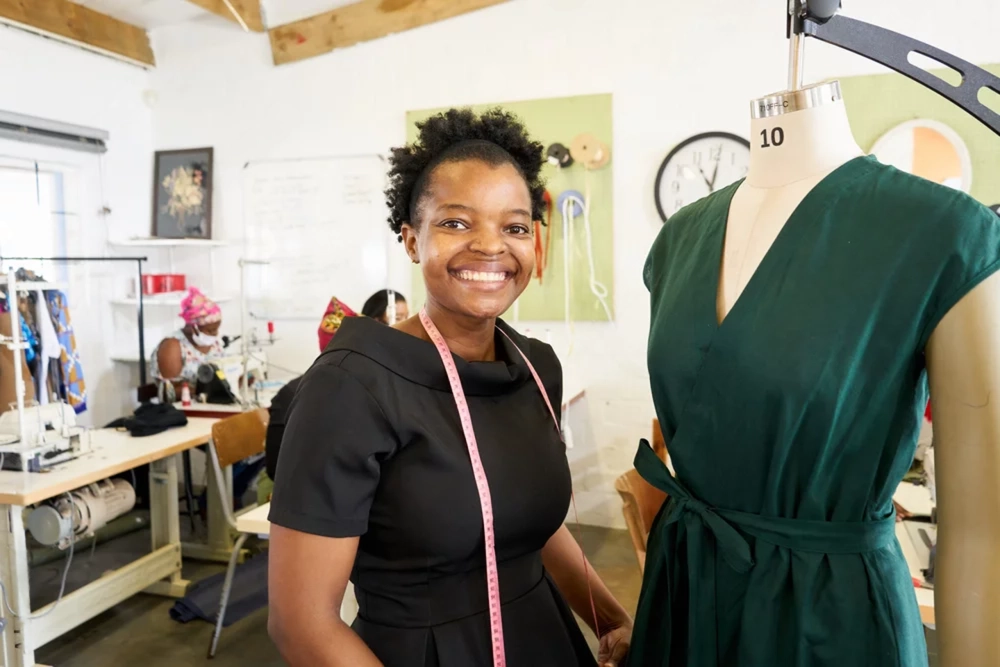
Across the continent, women are building companies that move well beyond survival entrepreneurship. Founders such as Lerato Masuku in construction, Claudia Machaieie in environmental services, Isabel Mandofa in agribusiness, Olamide Alade in fashion, and Mbali Ndandani in digital marketplaces are creating enterprises that employ other women and strengthen local supply chains.
It also contributes directly to job creation and African innovation.
Why Supporting Women Entrepreneurs Shapes Africa’s Future
Supporting female business owners is not only a gender equity issue. It is a growth strategy.
When women entrepreneurs thrive:
- Household incomes rise
- Local employment expands
- Informal businesses transition into the formal sector
- Tax bases strengthen
- Communities gain stability
For Africa to meet its sustainable development goals, women must be full participants in the startup ecosystem, capital markets, and leadership pipelines.
Programs such as She Wins Africa, Sourcing2Equal, and gender-focused accelerators show that education and skills development, mentorship, and market access can significantly improve outcomes. Gender-lens investing and gender-responsive policy are increasingly recognized as essential tools rather than optional initiatives.
Chrysalis and the Role of Catalysts
This is where organizations like Chrysalis play a vital role.
Chrysalis operates at the intersection of awareness, education, and advocacy. By strengthening knowledge, community, and capital readiness, Chrysalis helps women entrepreneurs move from participation to power.
Change does not happen through funding alone. It happens when women gain access to information, networks, confidence, and systems that recognize their economic rights.
Chrysalis contributes to this ecosystem by amplifying voices, supporting leadership, and building pathways for long-term impact.
A Global Lead Worth Investing In
Africa already leads the world in women in entrepreneurship. The question is no longer whether African women will build businesses. They already are.
The real question is whether Africa and its partners will invest at a level that matches this leadership.
Closing the entrepreneurship gap is one of the fastest and most inclusive ways to accelerate Africa’s sustainable development, strengthen Africa’s growth, and secure a future where economic opportunity is shared.